




- Categories: Blog
- Author: Ella
- Time of issue: 2026-08-18 16:52
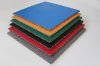
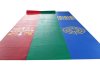
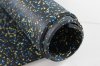
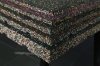
Rubber is good for flooring thanks to its inherent abrasion-, impact-, water-, and slip-resistance. These properties, coupled with rubber’s relative ease of installation, make rubber flooring one of the best options when it comes to resurfacing areas of your home or business. Rubber mats, rolls, and runners are all great forms of rubber flooring that can greatly enhance the usability, as well as visual appeal, of the locations over which they are installed. We offer rubberized mats made of either recycled, reclaimed, or synthetic rubbers—compositional variations which affect the applications that each rubber mat is best suited to handle. Recycled and reclaimed rubbers are made from discarded tires, and the fact that so many of our rubber mats are made of these types of rubber reflects our forward-thinking and eco-conscious philosophy. Plus, car tires are designed to withstand the harshest outdoor conditions, which makes rubber matting made of post-consumer tires exceptionally resilient to a wide range of conditions. The level of durability exhibited by car tires is directly transferred into our recycled and reclaimed rubber mats, making them long-lasting and cost-effective products. In contrast, a synthetic-rubber mat is made using a blend of chemical compounds that gives the rubber enhanced physical and chemical properties. Compared to natural rubber, synthetic rubbers tend to offer more physical strength, abrasion resistance, chemical resistance, and weather resistance. This makes our synthetic-rubber mats more durable and long-lasting than their natural-rubber counterparts.
Rubber, whether tire-derived or synthetic, offers excellent traction, floor protection, and anti-fatigue capabilities. Rubber is naturally a tacky material that is excellent for increasing non-slip traction. It retains a high coefficient of friction and is highly moisture resistant, allowing a rubber mat to enhance traction even when precipitation inundates its surface. Oftentimes, a roll of a custom rubber mat or a style of interlocking rubber floor mats comes prefabricated with a corrugated surface. While this may seem only like an embellishment, it accomplishes much more. When the surface of a rubber mat is corrugated—thanks to all the variations in texture—the mat exhibits a greater total surface area. This increases the number of points of contact between the mat and its user’s shoes. These points of contact essentially behave as gripping points—the more points of contact between your shoes and the floors, the less likely you will slip and fall after encountering a slippery hazard. In short, a corrugated rubber mat enhances traction better than does smooth rubber matting. Additionally, rubber’s high tensile strength means that it can stretch to multiple times its original size without tearing. Therefore, rubber efficiently absorbs the force from impacts, providing excellent floor-protection against most sources of physical damage—for this reason, you see commercial rubber matting so often in gyms. Rubber is one of the best materials for a heavy-duty floor mat. Furthermore, one underrated use of a rubber mat is as anti-fatigue matting. Rubber is a soft, cushioning material that relieves the pressure to which people’s feet and joints are subjected on a daily basis. And as if all this was not enough, rubber is also extremely resistant to weathering, which makes it a versatile option that is applicable in projects both indoors and outdoors.
- rubber flooring
- rubber mat
- interlocking rubber floor mats
Previous:None